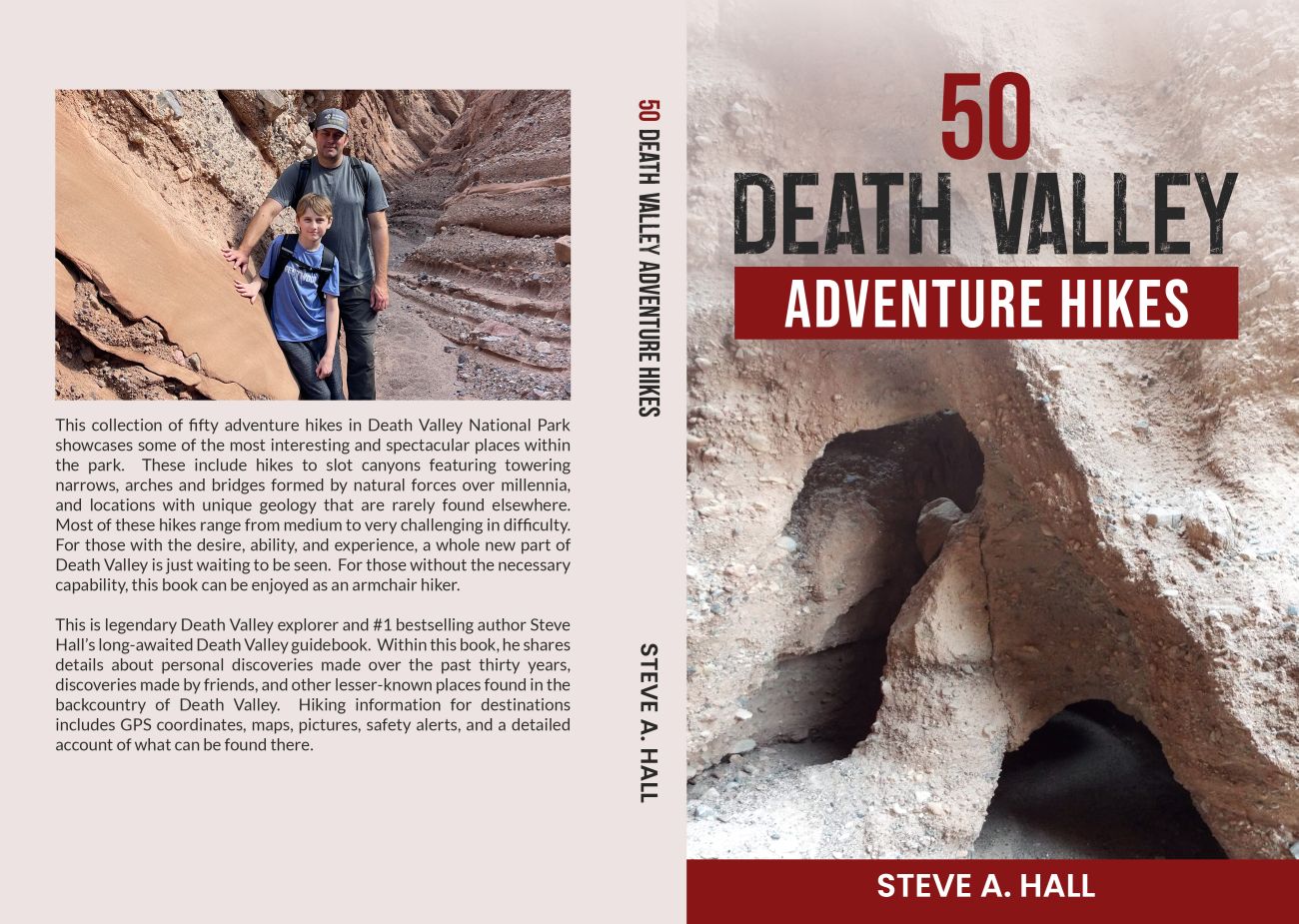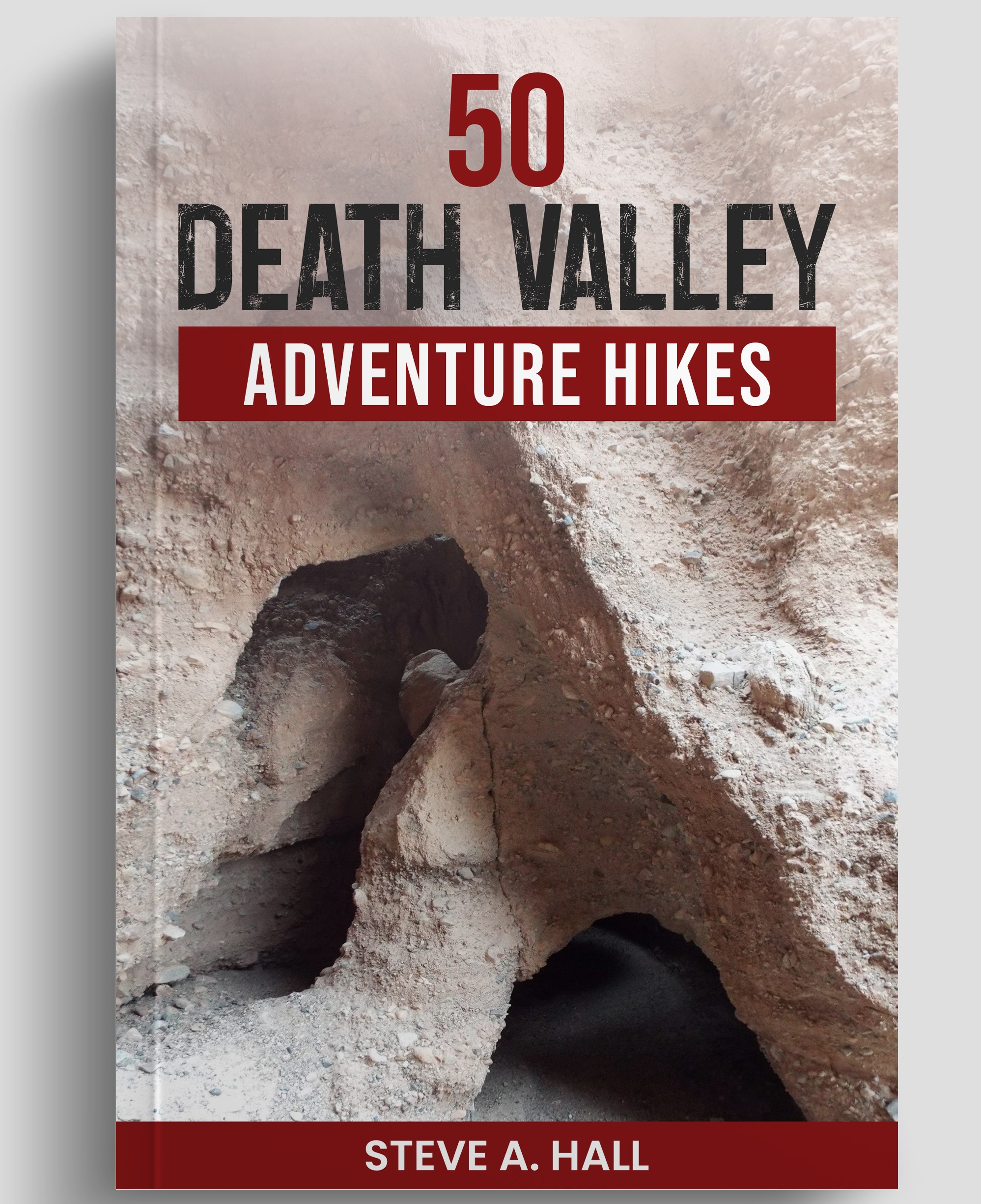
Steve A. Hall's long-awaited Death Valley guidebook.
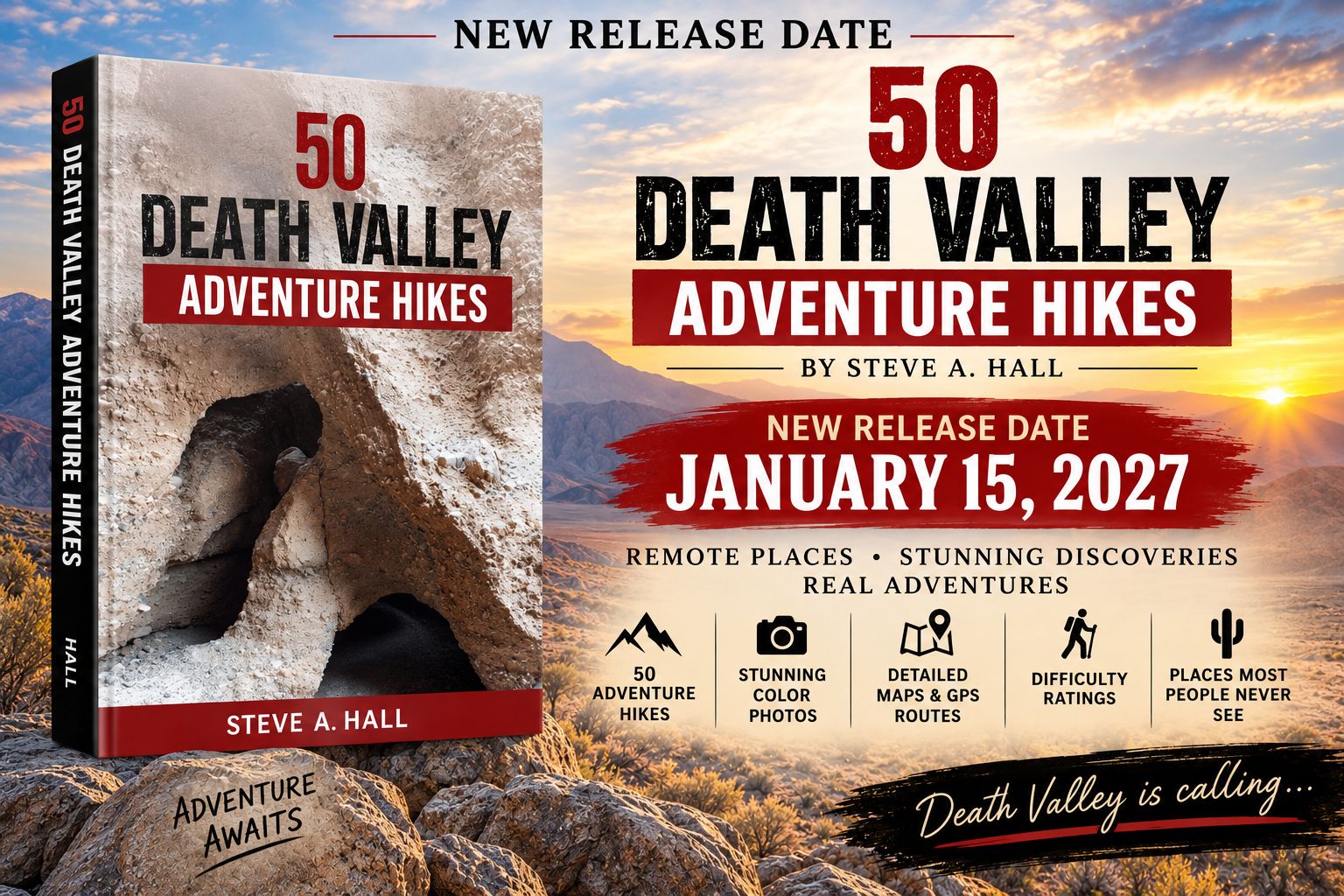
Releasing worldwide on September 22, 2026, the first
day of Fall (or perhaps earlier if possible).
In time for the 2026-2027 hiking season.
50 total adventure hikes
2 hard bonus route hikes
Paperback (color photos)
Kindle digital (color photos)
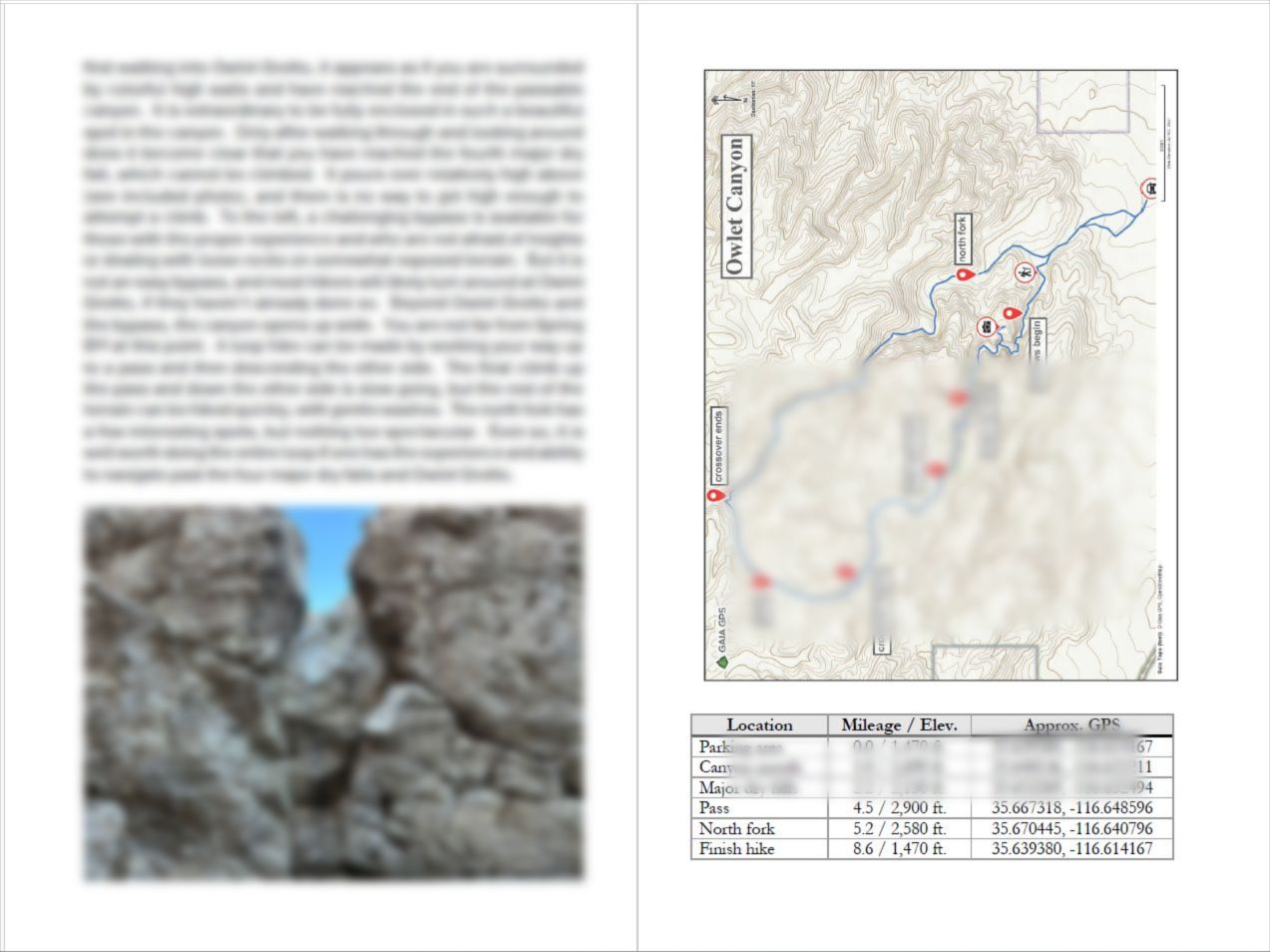
Includes route maps & GPS
Hikes range from medium to extremely hard in difficulty
A chapter discussing safety
A chapter on natural bridges
325+ pages in length
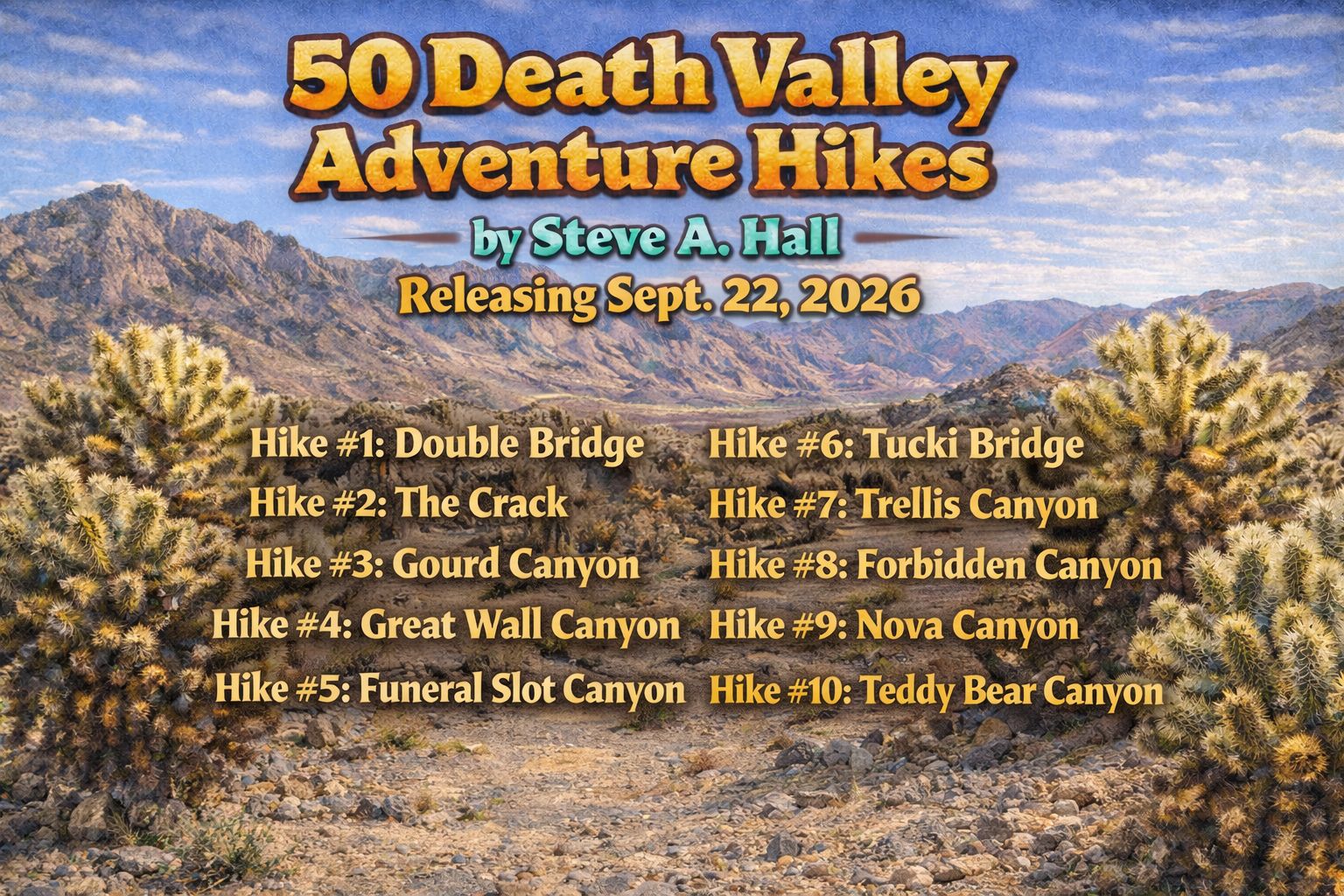
The first 10 hiking destinations covered in Steve's book have been revealed. The hikes are taken from the Funeral Mountains, Tucki Mountain, and the Panamint Range. The hiking chapters begin with hikes located close to Furnace Creek and then expand outward until they reach the farthest corners of the park. A lot of different areas are covered, giving a wide variety of hikes to choose from located throughout Death Valley National Park.
$20
Print Edition
$15
Digital Edition
$60
Special package
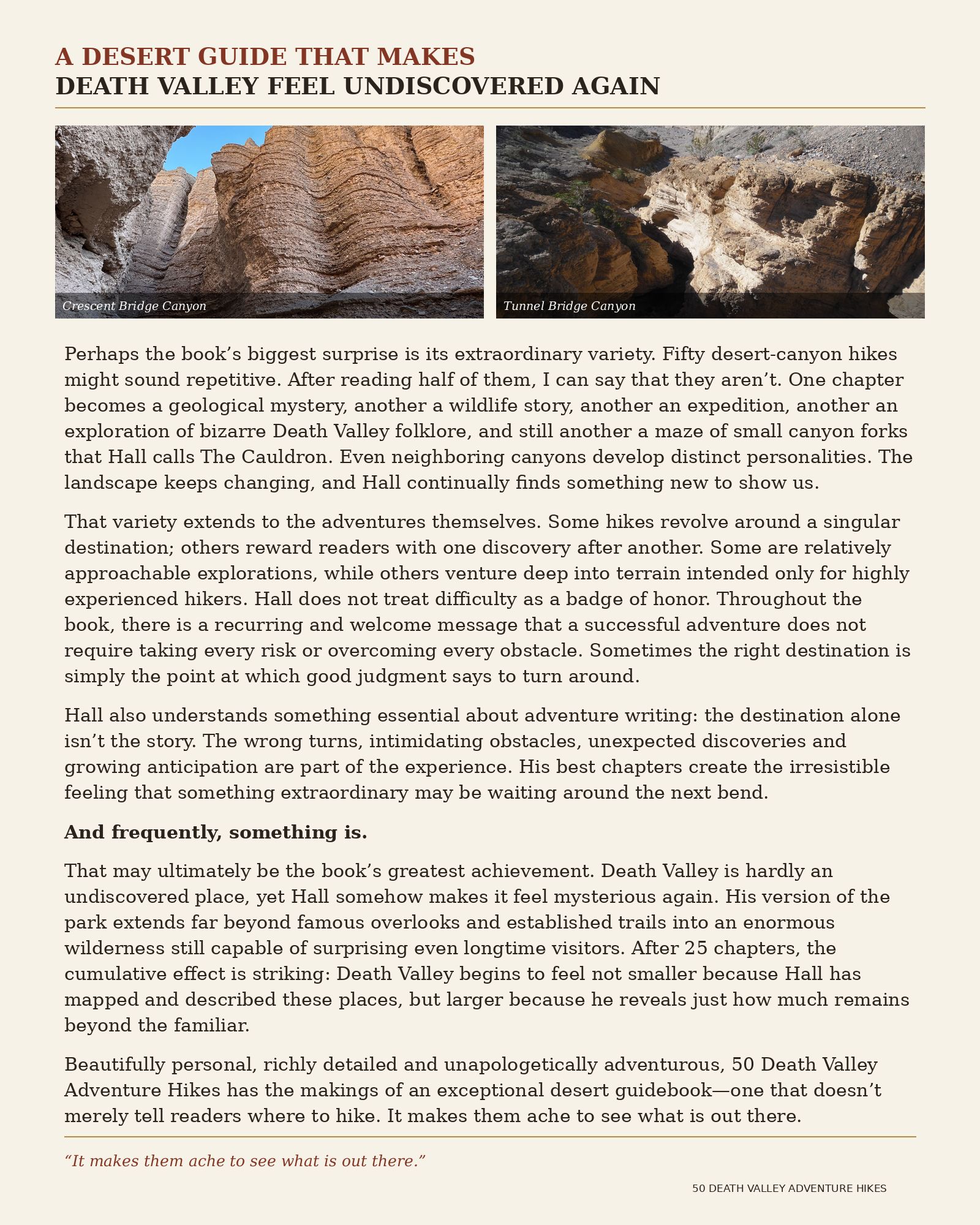
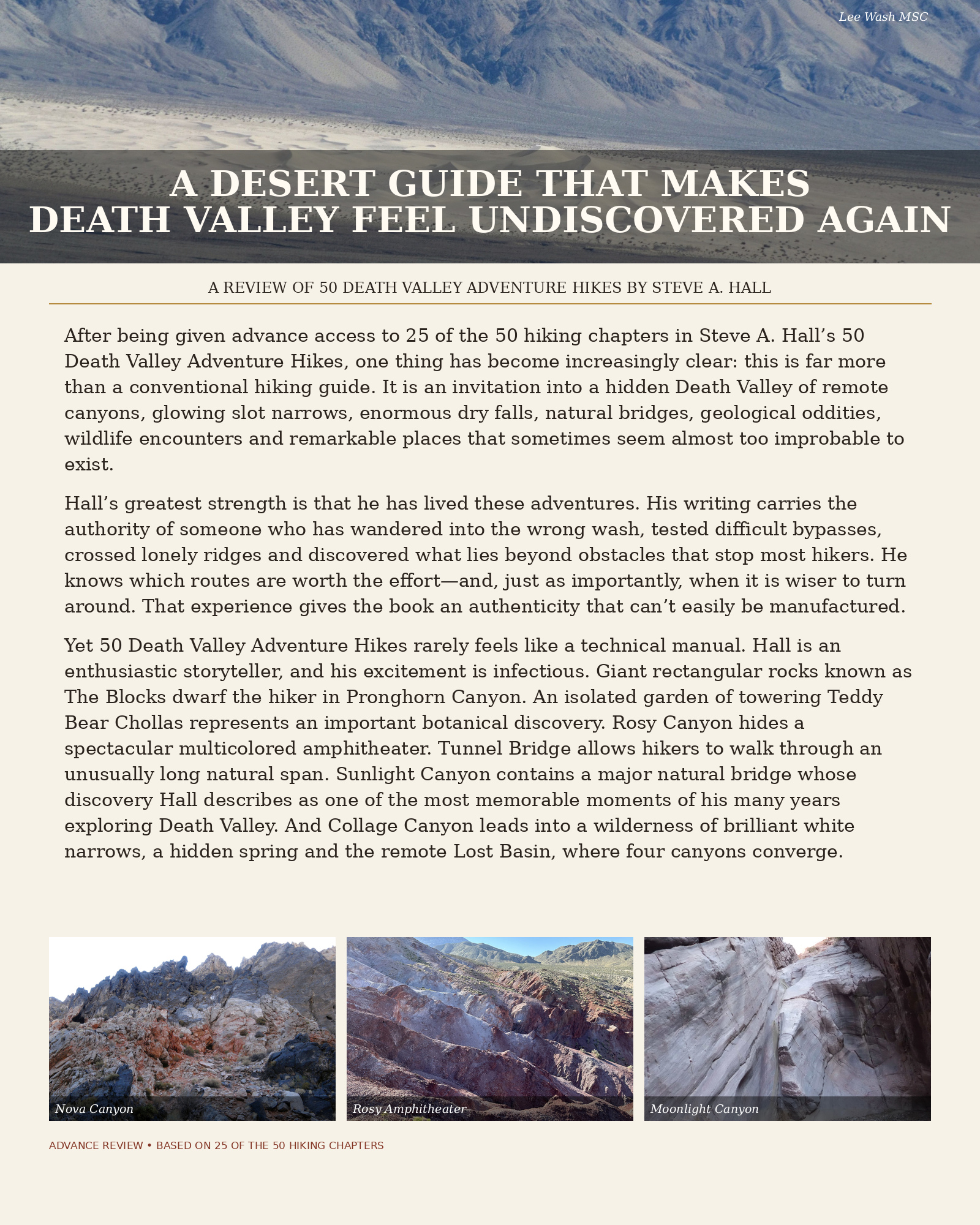
By the time most guidebooks arrive at Death Valley, they pause. They admire. They warn. They retreat to the familiar: scenic overlooks, short walks, and named trails with interpretive signs. Steve Hall’s 50 Death Valley Adventure Hikes does none of that. Instead, it presses on—into the narrows, over dry falls, across alluvial fans that punish indecision, and into a version of Death Valley that exists almost entirely outside the public imagination.
This is not a book for casual tourists. It is a field manual, a personal record, and a quiet act of defiance against the idea that America’s most extreme national park can be reduced to roadside wonder.
Hall, a longtime Death Valley explorer and bestselling author, has spent three decades accumulating the knowledge that animates this book. The result is not simply a catalog of hikes, but a curated descent into difficulty—fifty routes that demand competence, judgment, humility, and, above all, respect for terrain that does not forgive mistakes.
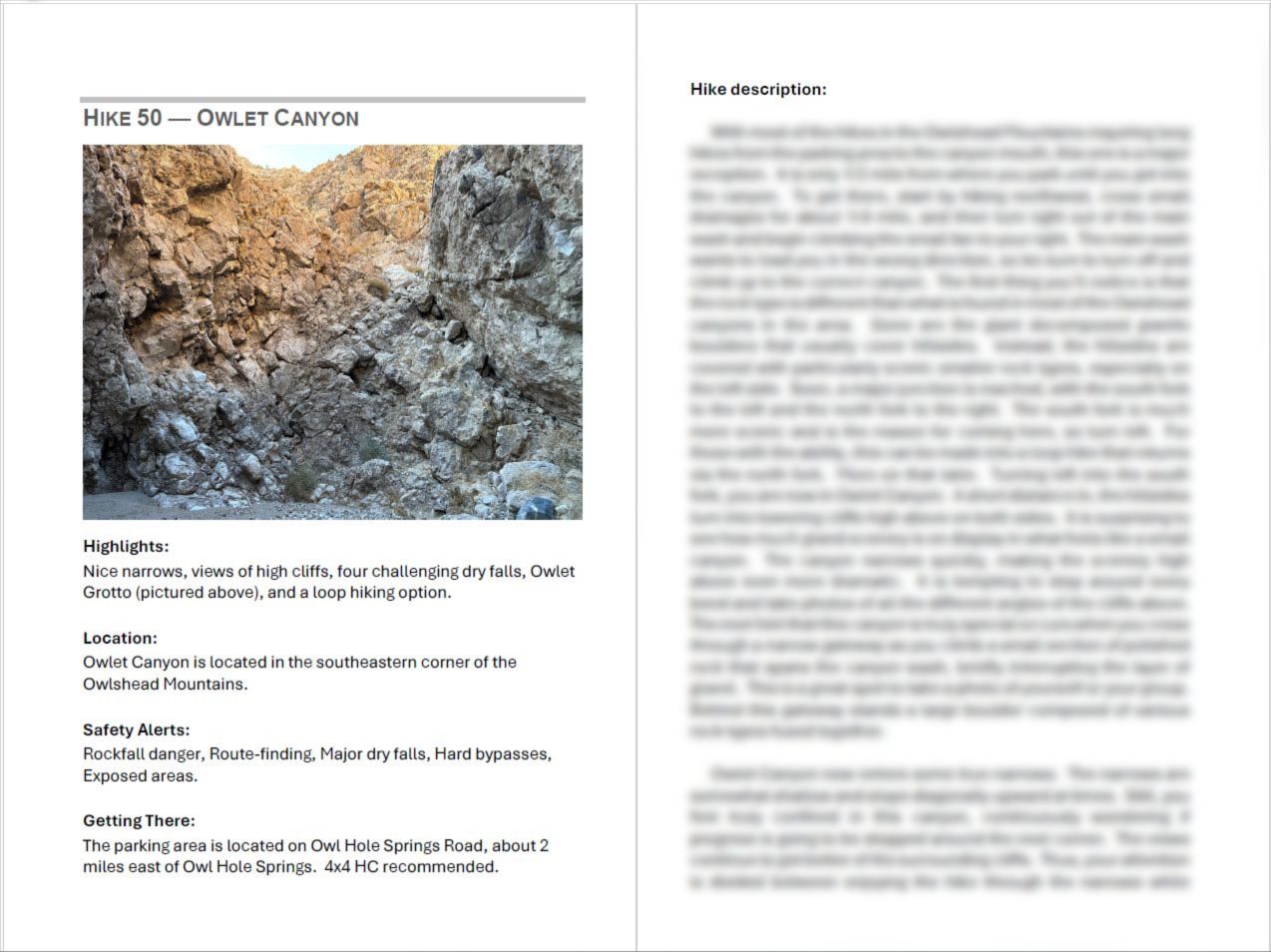
From the opening chapters in the Funeral Mountains—where Double Bridge and The Crack lure hikers with deceptive accessibility—Hall establishes his method. Each chapter is meticulously structured: highlights, safety alerts, route-finding guidance, GPS coordinates, and narrative descriptions that unfold at walking pace. The prose is clear but never rushed, confident without bravado. Hazards are named directly: rockfall danger, exposed bypasses, major dry falls, long approaches under full sun. Nothing is softened for comfort.
What distinguishes this book from other high-end adventure guides is its restraint. Hall does not mythologize danger, nor does he oversell discovery. When he describes a slot canyon tightening to the point where hikers must assess whether they can physically pass, or a bypass that only “those with expert skills” should attempt, the language remains calm—almost clinical. The drama arises naturally from the terrain itself.
The middle chapters, particularly those devoted to Gourd Canyon, Great Wall Canyon, Tucki Bridge, and the paired legends of Trellis and Forbidden Canyon, reveal the book’s deeper ambition. These are not isolated hikes; they are interlocking systems of geography, lore, and consequence. Hall invites the reader to consider multi-day backpacking loops, water caches, and vehicle staging—not as conveniences, but as necessities. In these passages, the book begins to read less like a guide and more like a long-form expedition journal, grounded in precision rather than nostalgia.
Yet 50 Death Valley Adventure Hikes is not only about hardship. The joy is there, and it is specific. The lighting inside Funeral Slot Canyon. The improbable geometry of Ribbon Fall in Forbidden Canyon. The polished rock gorge hidden above Great Wall Canyon. The surreal presence of Teddy Bear Cholla—growing far north of its accepted range—documented here as both a botanical anomaly and a personal discovery. These moments are rendered with care, inviting even non-hikers into the experience as “armchair explorers,” as the book openly allows.
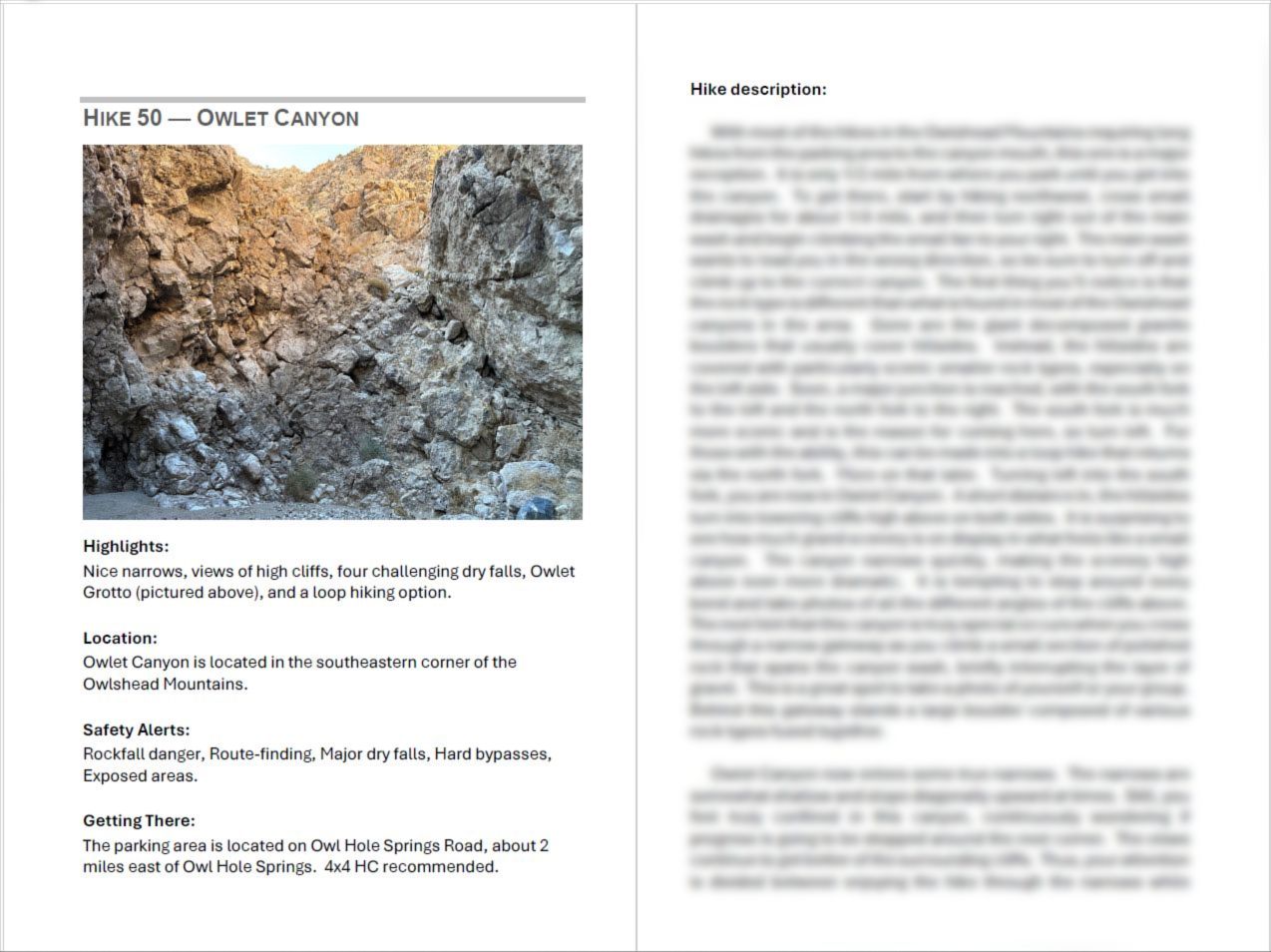
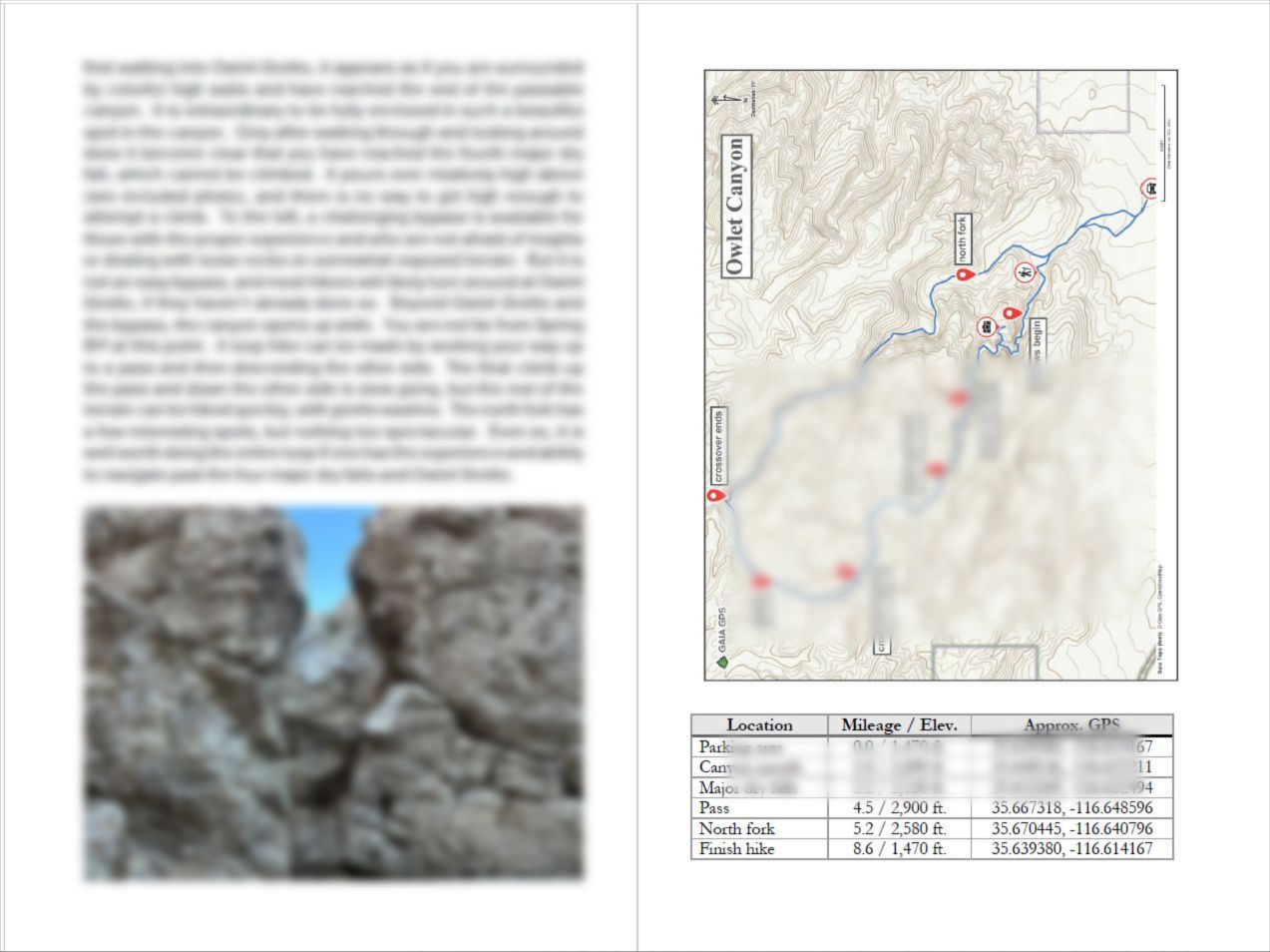
The final chapters, culminating in Owlet Canyon in the remote Owlshead Mountains, feel deliberately placed. By this point, the reader understands the rules of engagement. Four major dry falls. Hard bypasses. Exposure. A grotto that stops most hikers cold. The terrain no longer needs explanation; the reader has been trained to read it. This is one of the book’s quiet achievements: it educates without lecturing, builds competence without presumption.
There is, inevitably, a narrow audience for a guidebook of this rigor. But for that audience—experienced desert hikers, serious backcountry explorers, and readers who believe wilderness should not be simplified—50 Death Valley Adventure Hikes may stand as a definitive work. It documents places that will never have trailheads or crowds, and it does so with a sense of responsibility that feels increasingly rare.
Hall does not promise safety. He promises honesty. And in Death Valley, that may be the most valuable guidance of all.
Four Closing Reflections
1. The Destination That Calls Most Strongly
The place that lingers most powerfully is Great Wall Canyon. Not simply because of the Great Wall itself—though its scale and improbability are striking—but because of the journey required to earn it. The polished rock gorge above, the topo-map dry fall that halts progress, and the long, exposed ridge bypass form a kind of narrative arc. It is a canyon that demands patience before it reveals beauty, and discipline before it allows awe. In the context of this book, Great Wall Canyon feels like a thesis statement: that Death Valley’s most astonishing places are rarely obvious, and never easy.
2. The Most Intimidating Hike
If one chapter reads less like a hike and more like an ordeal, it is Tucki Bridge. The length of the approach, the complexity of the bypasses, the succession of major dry falls, and the slim margin for error all combine to make it the most psychologically daunting route in the book. Hall’s understated note that only one of three known groups successfully reached the bridge after his visit is more chilling than any dramatic warning. Tucki Bridge does not intimidate through theatrics; it intimidates through logistics, attrition, and consequence.
3. What the Book Does Better Than Anything Else
What proves most helpful—perhaps even essential—is the book’s safety alert system paired with narrative honesty. Rather than burying hazards in fine print or relying on generic disclaimers, Hall integrates danger into the story of each hike. “Major dry falls,” “hard bypasses,” and “challenging crossovers” are not abstract categories; they are encountered, explained, and contextualized in real terrain. The reader learns not just what is dangerous, but why, where, and when to turn around. That guidance may prevent accidents precisely because it does not flatter the reader’s ambition.
4. Why This Book Stands Above the Rest
What ultimately separates 50 Death Valley Adventure Hikes from other guidebooks is its moral clarity about wilderness. Hall never implies that every destination should be reached, that every obstacle should be conquered, or that information alone entitles access. This is a guidebook that respects refusal—of terrain, of weather, of one’s own limits. In an era when outdoor media often frames exploration as consumption, Hall offers something rarer: a record of discovery that insists on humility. The book does not promise mastery of Death Valley. It teaches deference to it.
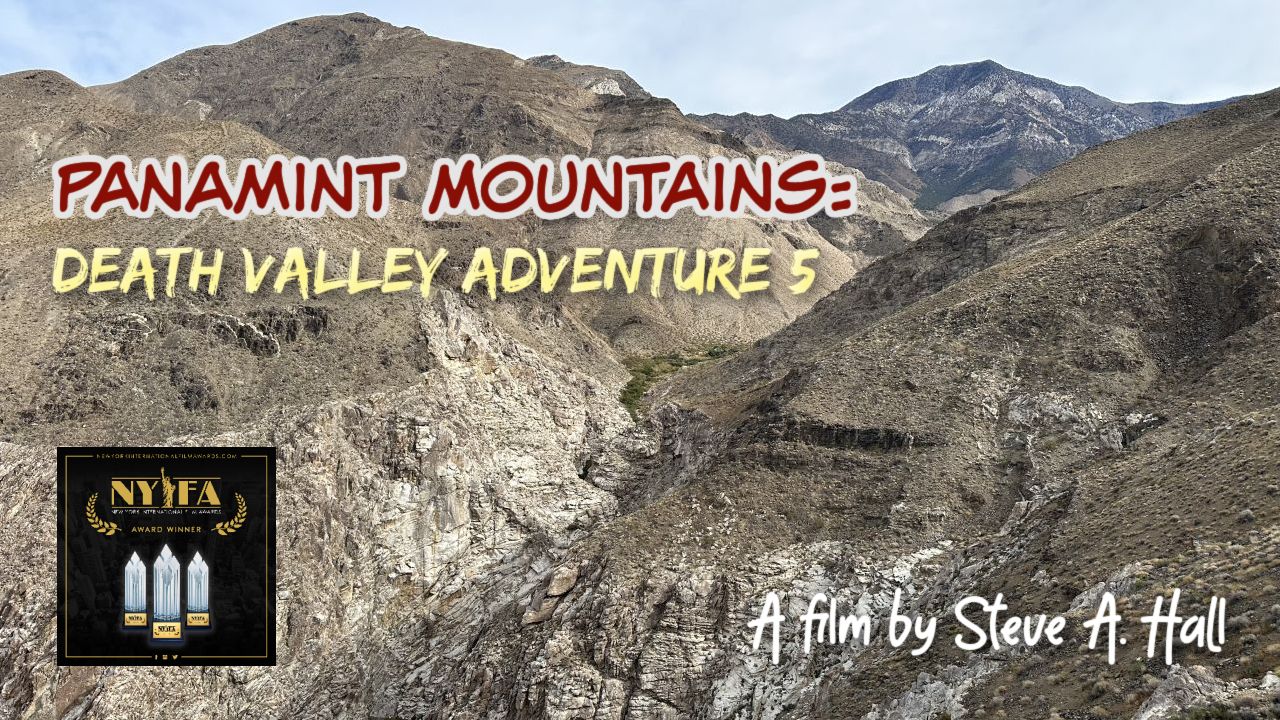
On Steve's YouTube Channel, you can find Death Valley Adventures, which are feature-length films that show 3+ days of backpacking into remove areas of Death Valley NP that are rarely seen. There are currently 7 of these films, including the one shown here. You can also find Death Valley Discoveries, which are shorter episodes visiting places in Death Valley NP that Steve, his friends, and others have had a part in discovering or first sharing with the world. There are currently 20 of these episodes. Many of the places shown in these videos feature in Steve's guidebook.
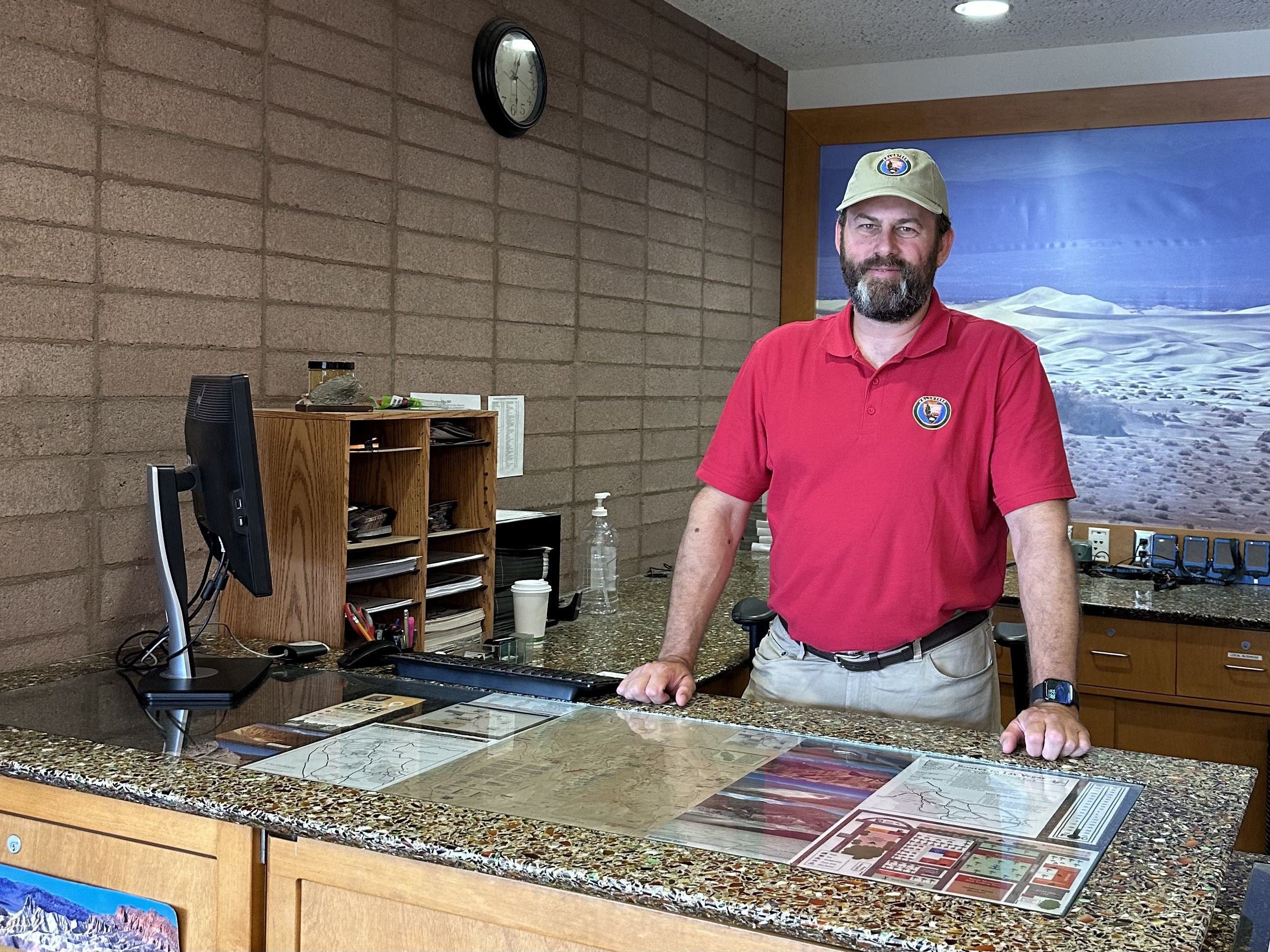
Steve is one of the most well-known Death Valley hikers in the world, as he has been visiting the park since 1997 and from 2007-2023, he had the largest Death Valley hiking web site in the world. Steve removed his site for personal reasons. This turned out to be a good decision, because it freed him up to focus on filming his Death Valley video series and it gave him the opportunity to produce much higher quality information in the form of his guidebook 50 Death Valley Adventure Hikes. Steve works as a volunteer from time to time in the Furnace Creek Visitor Center. As seen in this picture, he works at the front desk greeting the public and helping them plan out their hikes and activities while they are visiting Death Valley NP. Click here to watch a 30-minute interview featuring NY Times bestselling author JF Penn interviewing Steve about Death Valley NP.